Office Clearance in Palmers Green

Office clearance in Palmers Green should be straightforward, organised and shaped around the contents you need removed rather than around a one-size-fits-all approach. We handle clearance work for offices, workrooms and commercial spaces where furniture, paperwork, general items and mixed fixtures need to be taken away with care. The aim is to leave the space ready for its next use, with the right balance of speed, discretion and practical planning.
Our service covers complete and partial clearances, whether you are emptying a single room, refreshing a floor of desks or removing bulky items from a workplace that is changing layout. We can work with desks, chairs, cabinets, shelving, storage units, IT-related items and other office contents, while keeping the process simple for the customer. If you need a clear quotation, the best first step is to outline the type of space and the main items involved.
Two things usually make the work easier to plan. First, a brief inventory of what is staying and what is going helps to separate clearance from reuse, relocation or disposal. Second, access details matter, especially if there are stairs, loading restrictions, tight corridors or shared entrances. Clear information at the start helps us match the clearance to the space and the schedule. For a quote, simply send the basics and ask us to price the job.
Office furniture and contents clearance
Office furniture clearance often starts with the largest items, because they usually define the time, labour and vehicle space required. Desks, reception counters, meeting tables, cupboards and office seating all need handling that suits their size and construction. Some items can be moved as single pieces, while others may need careful dismantling before removal. We keep the approach practical and measured so the job can progress without unnecessary disruption to the rest of the premises.
Contents clearance can also involve mixed pieces that are no longer needed but still sit across different rooms, storage areas or ancillary spaces. That may include filing units, screens, small fixtures, display furniture or miscellaneous back-office items. Our work is to separate what is to be taken from what is to remain, then remove it in a way that suits the layout. If the clearance is being carried out during a move, refit or closure, it helps to decide the order of rooms before work begins.
When office furniture is collected carefully, it creates a tidier route through the building and makes the remaining tasks easier. Commercial clearances are rarely just about volume; they are also about access, weight, fixing points and the condition of each item. For that reason, we look at the practical details rather than making assumptions from photographs alone. A quote request should ideally mention room count, item types and any access limits that may affect the work.
IT equipment, filing and sensitive items

Many office clearances include items that are not simply bulky, but also organisationally important. Filing cabinets, archive boxes, desktop equipment, accessories and older electronics often need a more structured approach than ordinary household disposal. We can remove mixed office contents while keeping the work orderly, so the useful separation between furniture, records and equipment is preserved during the clearance. This matters when a workplace is changing hands or is being reorganised in stages.
Where filing or stored paperwork is present, the priority is to distinguish the clearance work from any separate record-handling process the business may wish to keep in place. Not every box must be opened on site, but the customer should decide in advance what is to be retained, archived, shredded elsewhere or removed with the rest of the contents. That decision saves time and prevents uncertainty once the clearance begins. It also helps the quote reflect the actual task rather than a guess.
For electronic items, office clearances often need a bit more care than a standard lift-and-load job. Screens, printers, towers and peripheral equipment may be grouped with furniture, but they can require different handling because of size, fragility or cabling. If you are preparing a quotation request, list the broad categories rather than every last cable. That gives enough detail for a sensible estimate without turning the process into unnecessary admin. Ask for a quotation when the main items are clear.
Partial office clearance and staged removal
Not every business needs a full strip-out. Partial office clearance can be the better fit when only some rooms, departments or storage areas are being emptied. This is common where a company is retaining part of the premises, replacing certain furnishings, or removing items from a space that still has to remain operational. The work can then be phased so that one area is cleared without interfering with another.
Staged removal is useful where timing matters. A reception area may need to stay presentable, a meeting room may need to remain available, or a back-office zone may be cleared before the next phase of works begins. In those cases, we can plan the clearance around the space you need to keep in use. It is usually best to identify the priority rooms first, then the items that can wait until later. That way the job has a clear order and fewer interruptions.
Partial clearances also work well when the contents are a mix of bulky and small items. The practical question is often whether the clearance should be organised by room, by item type or by access route. If you are unsure, a short description is enough to start the conversation. You can also request a quotation once you have a simple list of what needs removing and what must remain on site.
Preparing an office clearance quotation

A good quotation begins with the facts that affect the work, not with marketing language. The key details are the size of the space, the category of contents, the floor level, and whether there are any restrictions that make removal slower or more difficult. If you can identify the main items, the clearance can be assessed more accurately. This is especially helpful for workplaces with several rooms or mixed storage, where the amount of material may not be obvious at first glance.
There are two simple ways to prepare: list the items and describe the access. The item list should focus on the main pieces rather than tiny extras, while the access note can mention parking, lifts, stairs, loading access or other practical points. It is also sensible to say whether the clearance is urgent, staged over several visits or tied to a handover date. Those details help shape the plan without requiring a long explanation.
If you want to keep the request brief, that is fine. A concise message with room type, main contents and timing is usually enough to begin. We then work from the actual scope rather than from assumptions. For many customers, that is the simplest route to a fair quotation. When you are ready, send the basic details and ask for pricing so the job can be assessed properly.
Furniture disposal and reuse decisions
Furniture disposal in an office setting is often linked to choice rather than simple removal. A desk might be outdated, a chair set might no longer suit the layout, or a storage unit may no longer be needed after a relocation. Our clearance work helps remove those items as part of a broader office update. In some cases, the most suitable option is to clear a full room; in others, it is enough to remove selected items and leave the rest intact.
Where furniture is still usable, the customer may want to separate it from the items destined for disposal. That decision is usually best made before the clearance begins, because once objects are loaded together the sorting becomes less efficient. It also helps to decide whether the furniture is spread across open-plan areas, smaller offices or storage rooms, because each layout affects the route and the order of removal. This is a practical issue, not a decorative one.
For a business that is upgrading its workspace, the focus is often on moving from old furniture to a cleaner, simpler setup. Our role is to clear the old pieces so that the next stage can take place. If a quotation is needed, a short note about quantities and item types is enough to get started. Clear decisions on reuse, retention and disposal make the process more efficient from the outset.
About Palmers Green
Palmers Green is a north London district within the London Borough of Enfield, known for its distinctive high street, residential streets and strong connections to wider north London. The area developed significantly during the late nineteenth and early twentieth centuries as rail links made commuting easier, and much of its built environment reflects that period of expansion. Along Green Lanes, the long commercial corridor that passes through the district, independent shops sit alongside familiar chains, creating a busy urban strip that contrasts with the quieter roads nearby. The local character is shaped by this mix of commerce and housing, with terraces, semidetached homes and purpose-built flats extending away from the main road. Broomfield Park is one of the best-known open spaces in the area, offering lawns, trees, a lake and sports facilities, while the New River still forms part of the wider landscape in Enfield. The district also has a notable cultural presence, with long-established communities contributing to its shops, cafés and places of worship. Railway services at Palmers Green station connect the area to central London and surrounding suburbs, reinforcing its role as a practical commuter location. Architectural details vary across the neighbourhood, from interwar housing and Victorian frontages to later infill development, and this variety gives the area a layered streetscape rather than a single dominant style. As a result, Palmers Green reads as both a lived-in local centre and a residential district with a clear identity of its own.
Clearance for relocations, refurbishments and closures
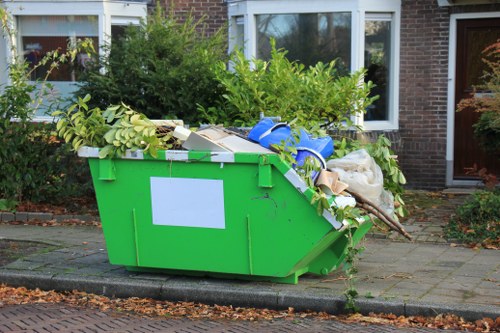
Office clearance is often part of a wider change in the business, not an isolated task. A relocation may leave surplus desks and storage behind, a refurbishment may require a floor to be cleared before contractors arrive, or a closure may need the premises emptied in a careful sequence. In each case, the clearance has to fit the wider programme. We focus on removing the contents in a way that supports the next step, rather than treating every job as identical.
Refurbishment projects can be especially sensitive because the clearance may need to happen before or alongside other trades. That makes timing and room order important. If the office is staying partially open, the work may need to be carried out with barriers, phased access or agreed room-by-room sequencing. This is where a concise plan helps. The more clearly the usable areas and the emptying order are set out, the easier it is to keep the job controlled and predictable.
For business closures, the emphasis is usually on systematic removal. Furniture, fixtures and general contents often need to be taken in a sensible order, with the remaining items checked off before the space is handed back. If you need this kind of clearance, it is worth stating whether the premises are still occupied or already vacated. That simple distinction can shape the job. Send the main facts and we can respond with a quotation based on the actual work required.
How the work is planned on site
On site, the most useful plan is the one that keeps the process steady. The clearance usually starts with an agreed check of the items, then moves through loading and removal in a sensible sequence. Furniture that blocks access may come out first, followed by smaller contents and any remaining mixed items. The aim is to avoid unnecessary shuffling, which saves time and keeps the workspace less congested during the job.
There is also value in deciding in advance which items should be grouped together. For example, desks might be cleared from one room, while storage and loose office contents are removed from another. That arrangement can make the work more efficient and easier to oversee. If anything needs to stay in place, it should be marked out clearly before the clearance begins. This helps prevent confusion and makes the job more dependable.
If the premises include shared access, controlled entry or narrow loading routes, those details are worth flagging early. They do not prevent a clearance, but they do affect how the work is sequenced. A clear description of the site helps us shape the job appropriately. When you are ready, you can ask for a quotation using the practical information you already have.
Responsible handling and sorting of office waste

Office clearance is not only about taking items away; it is also about handling the contents responsibly. Workplaces commonly generate a mix of furniture, packaging, worn fittings and general office waste, and these categories should not be treated as if they were all the same. A careful clearance separates the obvious furniture from smaller mixed materials, which makes the process more orderly and easier to manage from start to finish.
Sorting is particularly useful where there are multiple item types in one room. A single office might contain chairs, shelving, loose supplies, archived files, printers and ancillary items, all of which have different practical characteristics. When the clearance begins, it helps if the customer already knows what is staying and what is going. That simple decision avoids last-minute uncertainty and keeps the removal focused on the agreed scope.
For customers comparing options, the most helpful question is often not simply how much needs clearing?, but what kind of clearance is required? A few pieces of furniture, a storage room, a set of offices or a full commercial space all call for slightly different handling. Once that is clear, the quotation can be prepared against the real task. If you would like to move ahead, request a quotation for office clearance in Palmers Green.
Choosing the right scope for your office clearance
The right scope depends on what the premises are used for and what needs to happen next. A small office refresh may involve only selected items, while a larger change may require a full clearance of furniture and contents from several rooms. The useful decision is to match the clearance to the end point you are trying to reach. That avoids paying attention to the wrong details and keeps the job aligned with the space.
Sometimes the best option is a narrow, carefully defined clearance. Other times it is better to include all unwanted items in one visit so the room is fully ready. The choice can depend on layout, timing and how many people need access to the site while the work is underway. In a commercial setting, those practical questions matter more than broad promises. A straightforward scope is usually easier to deliver and easier to price.
If you are unsure whether the job should be full or partial, describe the office in plain terms and note which rooms need attention. We can then quote against the actual scale of the work. That is often the simplest way to keep the process accurate, especially where different rooms contain different amounts of furniture and office equipment.